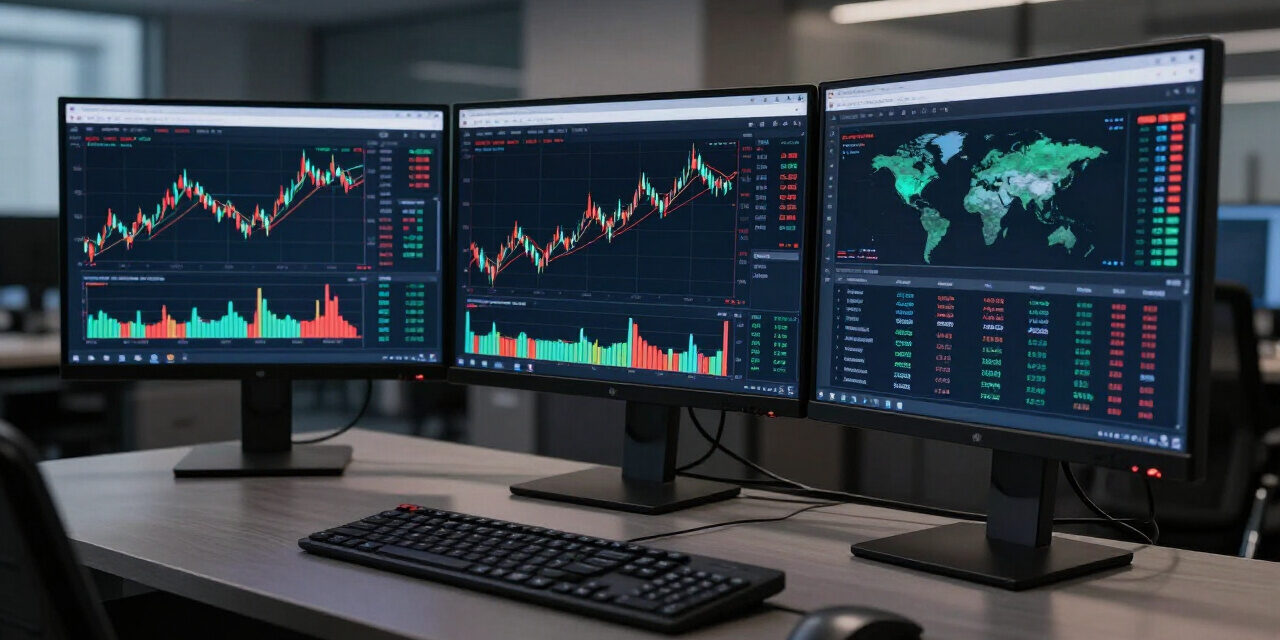
Elite Forex trading represents the pinnacle of speculative financial precision, where systemic risk management meets high-frequency technical analysis. Successful market participants navigate volatile currency pairs by exploiting global macroeconomic shifts, interest rate differentials, and institutional liquidity flows. Mastery in this domain requires more than intuition, as professional traders rely on quantifiable track records and disciplined capital allocation to achieve consistent, risk-adjusted alpha in the multi-trillion-dollar foreign exchange market.
Analyzing the methodologies of the world’s most successful currency traders reveals a recurring pattern of asymmetric risk-to-reward ratios. These top performers prioritize robust statistical modeling and trend-following strategies over emotional speculation. By studying their historical performance data and specific entry-exit frameworks, aspiring professionals can better understand how to mitigate drawdown while scaling positions in complex economic environments. This analysis highlights the essential strategies and quantitative mindsets defining the top tier of the Forex trading industry today.
Legendary Traders and Their Historical Performance
The title of best forex trader in the world typically belongs to individuals who demonstrate long-term compounding of capital through systemic risk management and macroeconomic analysis. These market participants prioritize high-conviction setups, maintaining discipline during volatile periods to ensure that their historical performance remains resilient against unpredictable global currency market shifts.
Identifying the top traders requires looking beyond simple profit figures. True expertise is measured by drawdowns, risk-adjusted returns, and the longevity of a trading career. Many professionals utilize advanced best forex trading strategies to navigate the complexities of liquidity and interest rate fluctuations.
Most elite traders operate through institutional-grade best forex brokers that offer deep liquidity and competitive spreads. By studying their historical performance, retail participants can discern the difference between luck and a repeatable, mathematically sound edge in the global currency markets.
George Soros and the Quantum Fund Legacy
George Soros represents the archetype of a global macro trader who identifies fundamental imbalances in monetary policy. His legacy centers on the 1992 sterling crisis, where he anticipated the Bank of England’s inability to maintain currency pegs. This strategic foresight remains a benchmark for professional currency speculation and risk.
Soros operated with a philosophy of reflexivity. He believed that investors’ biases affect market prices, which in turn change the fundamentals. This cyclical relationship allowed him to identify when a currency pair was mispriced relative to the underlying economic health of the issuing nation.
His approach is not for the faint of heart. Soros frequently utilized high margin gearing ratios to amplify his positions when he possessed high conviction. He taught the world that aggressive positioning during periods of political uncertainty can yield historic returns when executed with precision.
- For modern traders, the lesson is clear.
- You must analyze the central bank mandates and political stability of a country before committing capital.
- Without a rigorous understanding of the macro environment, your entries remain speculative bets rather than calculated investments based on economic shifts.
Stanley Druckenmiller and Macro Trading Excellence
Stanley Druckenmiller is widely considered one of the most consistent traders in financial history, known for his ability to synthesize vast amounts of economic data into binary trading decisions. His methodology relies on identifying inflection points where the market consensus diverges sharply from the objective economic reality of a nation.
Druckenmiller spent years refining his ability to focus on two or three high-probability trades. He avoids over-diversification. Instead, he waits for the market to offer a clear opportunity where the risk of loss is limited, but the upside potential is statistically skewed in his favor.
He views the market as a psychological battlefield. When he sees a divergence in bond yields compared to currency valuations, he scales into positions methodically. His career demonstrates that patience is the greatest asset a trader can possess when managing multi-billion dollar portfolios.
The ability to admit a mistake is central to his success. If the thesis changes, he exits immediately. He does not hold onto positions out of pride. Maintaining a professional mindset requires the humility to cut losers early while letting winning positions run toward their fundamental price targets.
Risk Management Lessons from Top Performers
Risk management is the singular factor separating the best forex trader in the world from those who fail within the first year. Professional traders treat capital as a finite resource, employing strict position sizing, stop-loss orders, and psychological protocols to ensure that a single bad trade cannot wipe them out.
The core of professional risk management involves calculating the potential impact of a trade before opening it. If a position does not offer at least a 2:1 reward-to-risk ratio, the best traders generally pass. This keeps the statistical probability of long-term account growth in their favor.
Avoiding the temptation to use excessive margin gearing is essential. While high gearing can generate massive returns quickly, it also creates an environment where small fluctuations cause margin calls. Top traders prefer to use moderate amounts of margin to maintain a buffer during unexpected news events.
- They also document every decision.
- By keeping a trading journal, you identify recurring behavioral patterns that prevent you from reaching your peak potential.
- Consistency in logging your trades allows for the refinement of your best forex trading strategies over several fiscal quarters.
Frequently Asked Questions About Legendary Forex Traders
Who is the best forex trader in the world today?
There is no single person who holds this title because professional trading is often done behind closed doors at hedge funds. However, figures like George Soros, Stanley Druckenmiller, and Paul Tudor Jones remain the gold standard for performance, risk management, and the ability to profit from macro trends.
Do top traders use technical or fundamental analysis?
Elite traders almost exclusively use a blend of both. They use fundamental analysis to establish the macro bias and long-term price targets, while they use technical analysis and price action to determine the exact entry, exit, and stop-loss levels for their specific trades.
How much capital is needed to start trading like a professional?
Professional trading is less about the starting amount and more about the percentage of returns and risk management discipline. While you can start with small amounts, scaling requires a consistent track record. Most professionals seek regulated environments provided by the best forex brokers to handle larger volumes.
Can I copy the strategies of these legendary traders?
- You can learn from their principles, such as top-down macro analysis and disciplined risk management, but copying them directly is impossible.
- Their trades are based on private intelligence, institutional access, and capital sizes that retail traders do not possess.
- Focus on the core mechanics of their decision-making processes.