
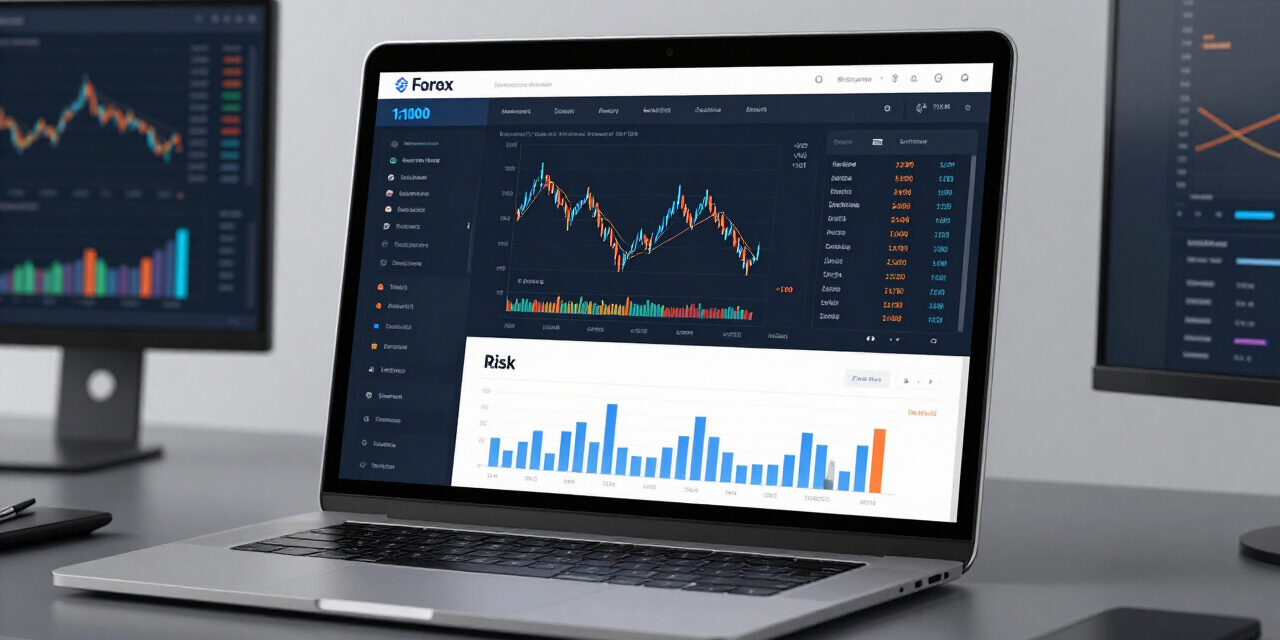
Navigating the margin gearing ratios at XM requires a deep understanding of risk management and capital preservation. As a trader, you must balance the potential for increased market exposure against the inherent volatility of currency pairs. Managing your positions effectively demands precision in calculation and strict adherence to internal risk protocols.
This guide evaluates the specific mechanics of the xm leverage structure for 2026. We examine how the 1:1000 ratio impacts your margin requirements and account equity. By understanding these fiscal mechanisms, you gain the technical clarity needed to execute trades while mitigating the probability of catastrophic account drawdown or unexpected stop-outs.
Understanding XM Leverage Mechanics
XM provides dynamic margin gearing ratios reaching up to 1:1000 for specific account types, allowing traders to control larger market positions with smaller capital requirements. This mechanism functions by reducing the collateral held as margin, which directly affects your free equity and the overall resilience of your open trading positions.
The margin gearing ratio determines the amount of capital required to open and maintain a position. When you utilize a 1:1000 ratio, you control a position size one thousand times the size of your initial margin deposit. This drastically lowers the entry barrier for retail accounts.
High ratios shift the sensitivity of your account equity to market fluctuations. If the market moves against your position, the available equity drops rapidly because the margin usage is minimal. Proper management requires monitoring the margin level percentage constantly to prevent premature closure by the trading platform.
- Regulatory frameworks influence these ratios based on your residency and the specific entity of the brokerage.
- While XM offers high options in specific jurisdictions, European clients face tighter constraints due to ESMA regulations.
- Always verify your account classification to determine the maximum ratio available for your specific region.
Calculating 1:1000 Margin Requirements
Calculating your margin usage at 1:1000 requires dividing the total contract value by one thousand. For a standard lot of 100,000 units, the required margin is 100 units of the base currency. This calculation provides the foundation for determining how much free capital remains for additional market exposure.
Assume you are trading one lot of EUR/USD. The contract size is 100,000 units. Using 1:1000 margin gearing, the calculation is 100,000 divided by 1,000. This equals 100 EUR. You must have at least 100 EUR in your account to initiate this specific trade on the platform.
If your account balance is in USD, you must adjust the calculation based on the current exchange rate. If EUR/USD is trading at 1.1000, your 100 EUR requirement converts to 110 USD. Accurate math ensures you do not trigger a margin call due to insufficient funds at the point of entry.
- Dynamic margin gearing at XM adjusts based on the volume of your open positions.
- As your total open volume increases, the brokerage may automatically lower the maximum available ratio.
- This risk mitigation strategy prevents retail traders from accumulating excessive exposure that could lead to rapid account liquidation during high volatility.
Risk Limits and Stop-Out Levels
Stop-out levels at XM represent the specific percentage of margin remaining that triggers the automatic closure of your most unprofitable positions. At this threshold, the system dictates that your equity is no longer sufficient to maintain the risk associated with your active market exposure, protecting the firm from negative balances.
XM typically enforces a stop-out level at 20 percent. If your margin level drops to this point, the platform initiates the liquidation process. This process starts by closing the order with the largest loss. It continues until the margin level rises above the 20 percent requirement for the remaining trades.
Margin calls are the notifications you receive before the stop-out occurs. A margin call usually happens when your margin level hits 50 percent. This serves as a critical warning to either add more capital or close underperforming positions to avoid forced liquidation of your entire trading portfolio.
- Maintaining high margin levels is essential for long-term survival.
- Traders who utilize the full 1:1000 ratio often find their margin levels fluctuating wildly with small price movements.
- Always keep your utilization rate low to provide a buffer for market noise and unexpected economic events that trigger sudden price gaps.
Evaluating XM Account Types
XM Micro and Standard Accounts
The XM Micro and Standard accounts are designed to provide flexibility for retail traders, offering the maximum 1:1000 margin gearing option. These accounts allow for smaller lot sizes, enabling precise position sizing and risk management strategies tailored to the needs of individual market participants across various global financial markets.
The Micro account features a contract size of 1,000 units, while the Standard account features 100,000 units. Both accounts support the high margin gearing ratios required for aggressive portfolio management. These accounts are ideal for users who want to apply specific technical strategies without massive initial capital outlays.
Key specs include a minimum deposit requirement of 5 USD, which makes these accounts highly accessible. The platform provides access to over 55 currency pairs. Users can benefit from the lack of rejection of orders and no re-quotes, which are vital when trading during volatile market conditions with high leverage.
- Pros include rapid execution and the ability to hedge positions, which is a major advantage for sophisticated traders.
- Cons involve the high risk of over-leveraging if one does not strictly monitor position sizing.
- The 1:1000 ratio should be treated as a tool for capital efficiency, not as a requirement for every trade.
XM Ultra Low Accounts
XM Ultra Low accounts provide tighter spreads by removing deposit bonuses and offering more competitive pricing on high-volume currency pairs. These accounts are favored by scalpers who need minimal transaction costs to operate effectively while still maintaining the ability to utilize high margin gearing ratios during their trading sessions.
Ultra Low accounts come in Standard and Micro variations, catering to both retail and semi-professional traders. The primary benefit is the spread, which starts from 0.6 pips. This cost reduction is significant when executing numerous trades throughout the day, as it prevents the transaction costs from eroding your trading equity.
The specifications include a minimum trade size of 0.01 lots for standard and 0.1 lots for micro. You retain the 1:1000 ratio capacity, which allows you to manage capital across multiple pairs simultaneously. This account type does not include the standard XM deposit bonus, focusing instead on pure price competitiveness.
Pros involve the lower cost of entry per trade and better performance during high-frequency trading. Cons include the lack of deposit bonuses, which some traders use to increase their effective margin. Evaluate your strategy before selecting this account; if you are a long-term position trader, the standard bonus-eligible account might provide better value.
Strategic Management of High Gearing
Strategic management of high gearing requires capping your total position size relative to your net account equity at all times. By treating your margin as a limited resource, you can prevent the platform from triggering stop-outs during periods of extreme market volatility or unexpected liquidity events across global financial markets.
Never allocate your entire account balance to a single trade. If you use 1:1000 gearing, a 0.1 percent movement against your position consumes a significant portion of your available margin. Professional traders often limit their total active exposure to a fraction of their capital to maintain a buffer.
Utilize stop-loss orders on every trade. This is non-negotiable when dealing with high ratios. A stop-loss acts as your primary insurance against excessive losses. Even if your margin level remains high, the stop-loss prevents a singular bad trade from damaging the viability of your entire account equity.
- Stay informed about economic calendars.
- News events cause liquidity to evaporate and spreads to widen, which can lead to slippage.
- During such times, your margin requirements may be temporarily adjusted by the broker.
- Reducing your position sizes before major announcements is a standard practice for protecting your account from volatility.
Frequently Asked Questions
Frequently asked questions about xm leverage address the core concerns of retail traders, specifically regarding margin requirements, risk management, and the practical application of 1:1000 gearing ratios. Understanding these responses helps clarify the operational environment and ensures that traders can navigate the platform with confidence and fiscal responsibility during 2026.
- What is the maximum leverage available at XM? XM offers up to 1:1000 for specific account types and regions, though this varies based on your regulatory jurisdiction and the asset class being traded.
- Does XM charge fees for using high leverage? The brokerage does not charge a fee for the ratio itself; however, you pay spreads and potential swap fees for holding positions overnight, which are more pronounced when using high ratios.
- Can I lose more than my deposit? XM provides negative balance protection for retail clients, ensuring that your account equity cannot fall below zero due to market volatility.
- How do I request a leverage change? You can modify your ratio through the member area settings within your account dashboard, provided the new ratio complies with your specific account type and regulatory status.