

The Power of 3 (PO3) framework represents a cornerstone methodology for professional traders navigating institutional market liquidity. By dissecting the daily price cycle into three distinct mechanical phases, traders can synchronize their market participation with the sophisticated footprint left by primary liquidity providers. This strategy focuses on identifying when smart money actors create ranges, trap retail participants, and eventually expand into a sustained directional move. Understanding how the market balances supply and demand via the Accumulation, Manipulation, and Distribution (AMD) sequence provides a structural advantage over reactive retail approaches. In this guide, we analyze the structural mechanics of the PO3 model, providing actionable insights for traders seeking to improve their execution accuracy during [currentmonth] [currentyear]. Mastery of these cyclical patterns allows for precision timing, moving away from subjective indicators toward objective institutional order flow identification.
Institutional liquidity is not random. It follows a rhythmic expansion and contraction process designed to facilitate large volume orders without slipping price. By aligning with these institutional footprints, you transition from playing against the market to moving with it. The PO3 strategy is essentially a study of professional execution timing, focusing on the specific window where the day sets its structural highs and lows. This guide serves as your comprehensive reference for identifying these windows and optimizing your order execution within the [currentyear] financial environment.
- Explore mastering daily AMD cycles in the complete ICT trading strategy guide.
- Explore combining Judas swings with breaker block trading setups.
- Explore identifying manipulation sweeps in liquidity sweep trading strategies.
Understanding the Power of 3 (PO3) Cycle
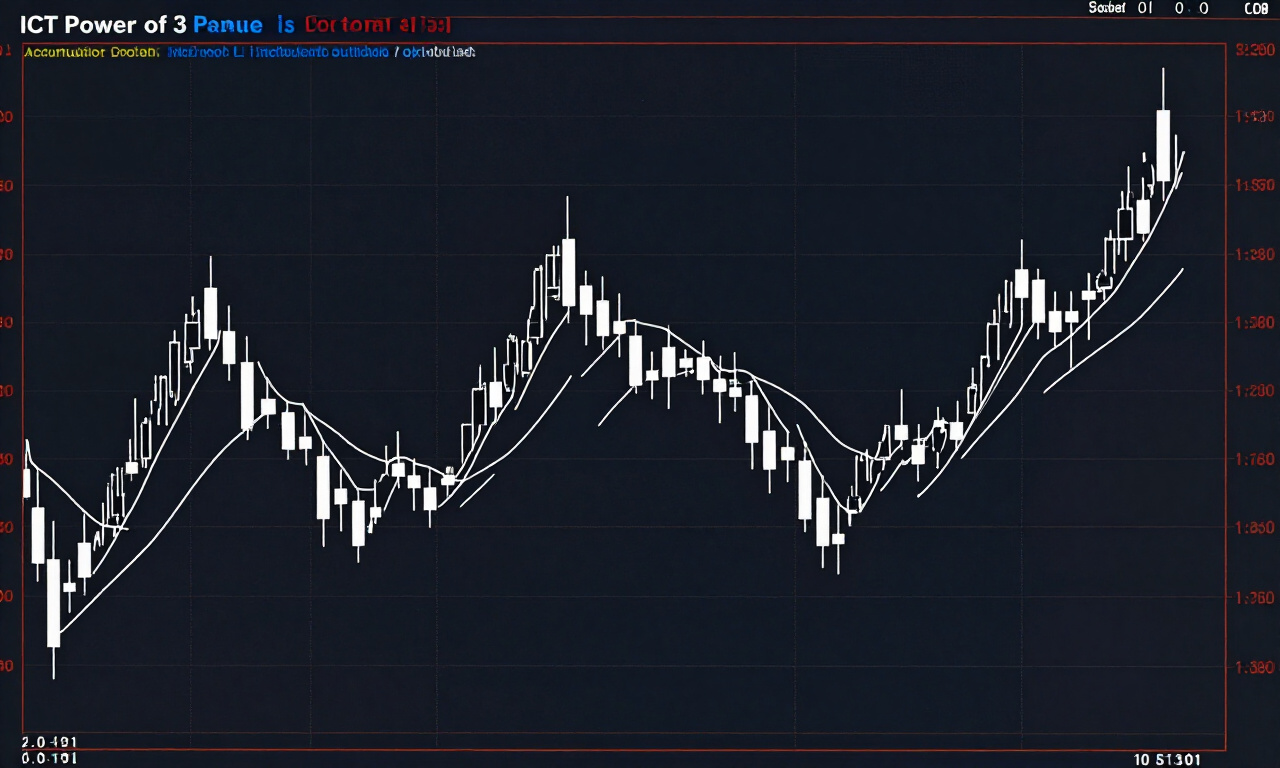
The Power of 3 refers to the fundamental structure of an institutional daily price cycle consisting of Accumulation, Manipulation, and Distribution phases. This cycle allows large participants to build positions, trigger retail stop-losses, and execute their final expansion phase, effectively creating the daily range for currency pairs and indices.
The PO3 concept is rooted in the idea that market makers require deep liquidity to fill massive buy or sell orders. When liquidity is thin, institutions create range-bound conditions to encourage retail traders to place orders. This phase is known as Accumulation. It is the period where retail traders often find themselves chopped out of positions as the price remains stuck between support and resistance levels.
Once the market has gathered enough interest, the Manipulation phase occurs. This is the “Judas swing,” a false move in the opposite direction of the intended trend. It is designed to capture retail stop-losses and break-even orders, clearing the way for the institutional move. Only after this liquidity grab does the Distribution phase begin, which defines the true directional move for the session.
Practitioner Pro-Tip: Never attempt to trade the Manipulation phase blindly. Always wait for the price to violate a short-term liquidity pool (like the previous session high or low) before considering your entry. This ensures the manipulation has actually occurred rather than just a continuation of the trend.
Phase 1: Accumulation Mechanics
Accumulation serves as the initial phase where institutional entities concentrate their orders within a tight price range. This phase generates the necessary liquidity for institutional entry, appearing as consolidation on lower timeframes. Recognizing this structure is vital for predicting the upcoming volatility shift in the late London or New York sessions.
During the Asian session, the market often exhibits a lack of significant direction. This “range-bound” behavior is the hallmark of the Accumulation phase. Retail traders often treat these ranges as trading opportunities by buying support and selling resistance. In reality, they are providing the liquidity that smart money uses to prepare for their actual move.
- Price fluctuates within a defined high and low range.
- Order flow remains balanced, with no significant imbalances or gaps.
- Volume is typically lower compared to the later expansion phases.
- Retail traders often over-leverage within these ranges, expecting them to break early.
If you see a very narrow range during the Asian session, exercise caution. Tight ranges usually imply that a massive Manipulation swing is imminent. The tighter the range, the larger the eventual expansion, as the price is coiled like a spring ready to release kinetic energy.
Phase 2: Manipulation (The Judas Swing)
Manipulation is a deceptive price move designed to trick retail participants into taking incorrect positions. This event often clears stop-losses and forces retail traders to abandon their original bias. By identifying this swing, you can enter trades at better prices than the bulk of the market participants during that session.
The Judas swing is the most critical component of the PO3 model. It is the catalyst that defines the high or low of the day. If the day is intended to be bullish, the market will first dip below the accumulation low to grab sell-side liquidity. This creates a “cheap” price point for institutions to start buying.
If you are looking for a short position, you should wait for the price to spike above the Asian session high. This move is usually swift and aggressive, aimed at hitting buy-stop orders. Once those orders are filled, the market loses the momentum to continue upward and reverses sharply. That reversal is the transition from manipulation to distribution.
Practitioner Pro-Tip: Always identify the liquidity pool you expect the market to take. If there is a clean double-top or triple-top from the previous day, the Manipulation phase will almost certainly target those levels before reversing. Do not guess the reversal point; wait for the liquidity sweep to confirm.
To master the Judas swing, one must study the relationship between time and price. Most institutional manipulation occurs during the transition between the London and New York opening windows. If you miss the initial move, do not chase it. A successful trade requires the entry to be as close to the manipulation peak as possible to ensure a high risk-to-reward ratio.
Phase 3: Distribution and Expansion
Distribution represents the final phase where institutions move the price to clear the remaining orders. This phase is characterized by strong, directional momentum that leaves behind price gaps and market structure shifts. Once this begins, the market rarely returns to the entry point, signaling a successful institutional trade execution.
After the Judas swing has successfully trapped retail traders, the distribution starts. If the institutional bias was long, the market moves away from the manipulation low with speed and conviction. The goal is to reach the opposing liquidity target—often the high of the previous day or a significant order block.
During the distribution phase, you will observe the formation of displacement candles. These are long-bodied candles that indicate institutional intent. They often leave behind Fair Value Gaps (FVG), which serve as areas of interest for potential re-entries if the initial move is missed. Traders focusing on [currentyear] market conditions often prioritize these gaps when scaling into positions.
- Sharp departure from the manipulation level.
- Multiple displacement candles confirming the trend.
- Creation of new Fair Value Gaps as the price moves.
- Consistent order flow without retracing into previous zones.
Distribution is the profit-taking phase for the smart money. By the time the retail public realizes the trend has started, the institutions are already looking for the next area to unload their inventory. Your objective is to join the move during the early transition out of the manipulation phase and hold until the target liquidity is hit.
Integrating PO3 with Market Structure
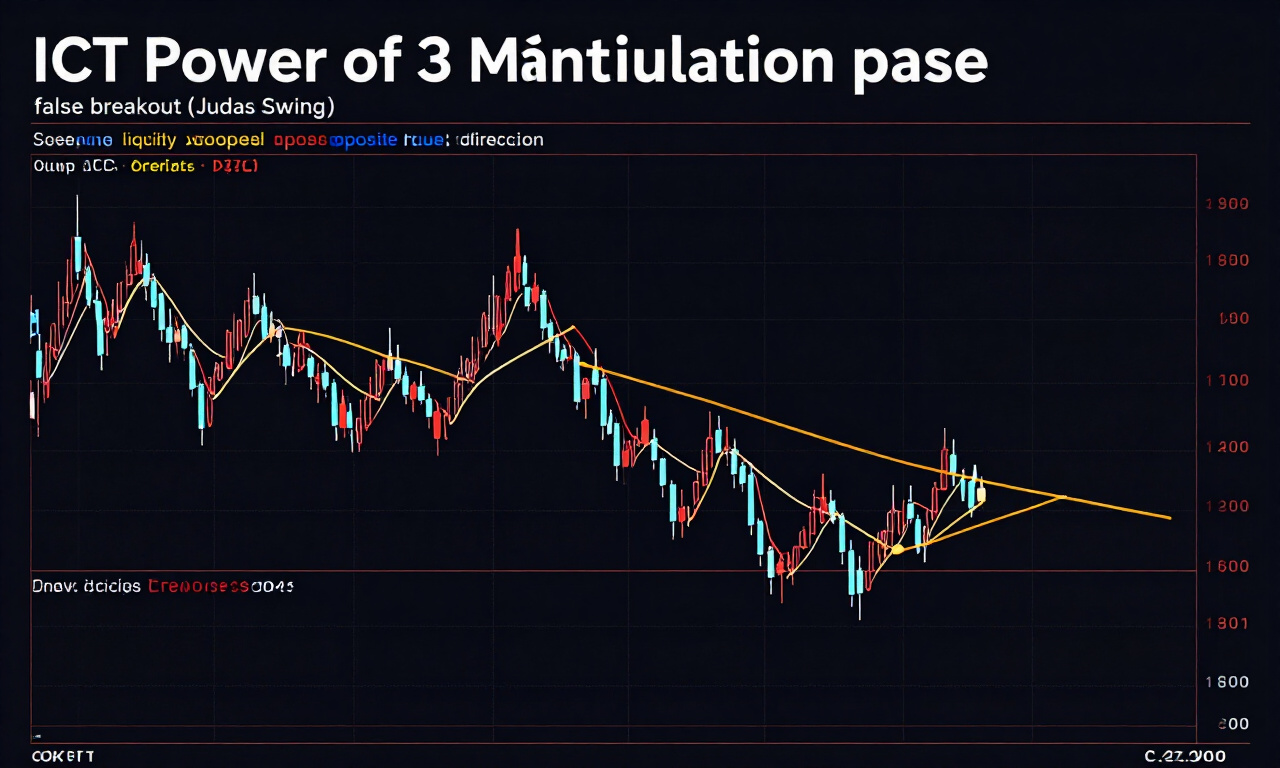
Integrating the Power of 3 with established market structure requires a hierarchical approach to multi-timeframe analysis. By observing the daily bias, you can apply the AMD framework specifically on the intraday charts, ensuring that your trades align with the dominant institutional trend rather than fighting the broader market cycle.
To effectively utilize PO3, you must first establish the higher timeframe narrative. If the weekly and daily trends are bullish, you should look for the AMD cycle to result in a long position. Attempting to trade a short setup in a strong bullish environment is a common mistake that leads to consistent losses. The PO3 strategy is a filter, not a signal generator. It works best when the direction is already established by higher-order institutional flow.
On the 15-minute or 5-minute chart, watch how the price interacts with the previous day’s high and low. These levels are magnets for liquidity. If the daily trend is bullish, the most profitable trades occur when the price dips into the previous day’s low (Manipulation) and then expands to the upside (Distribution). This is the “buy low, sell high” mantra in its most literal and professional form.
Practitioner Pro-Tip: Focus on the time of day. Institutional activity is highest during the New York morning session (the “Silver Bullet” window). Trades taken during this specific timeframe often see the cleanest completion of the AMD cycle compared to trades taken in the quiet afternoon.
Execution Rules for the Judas Swing
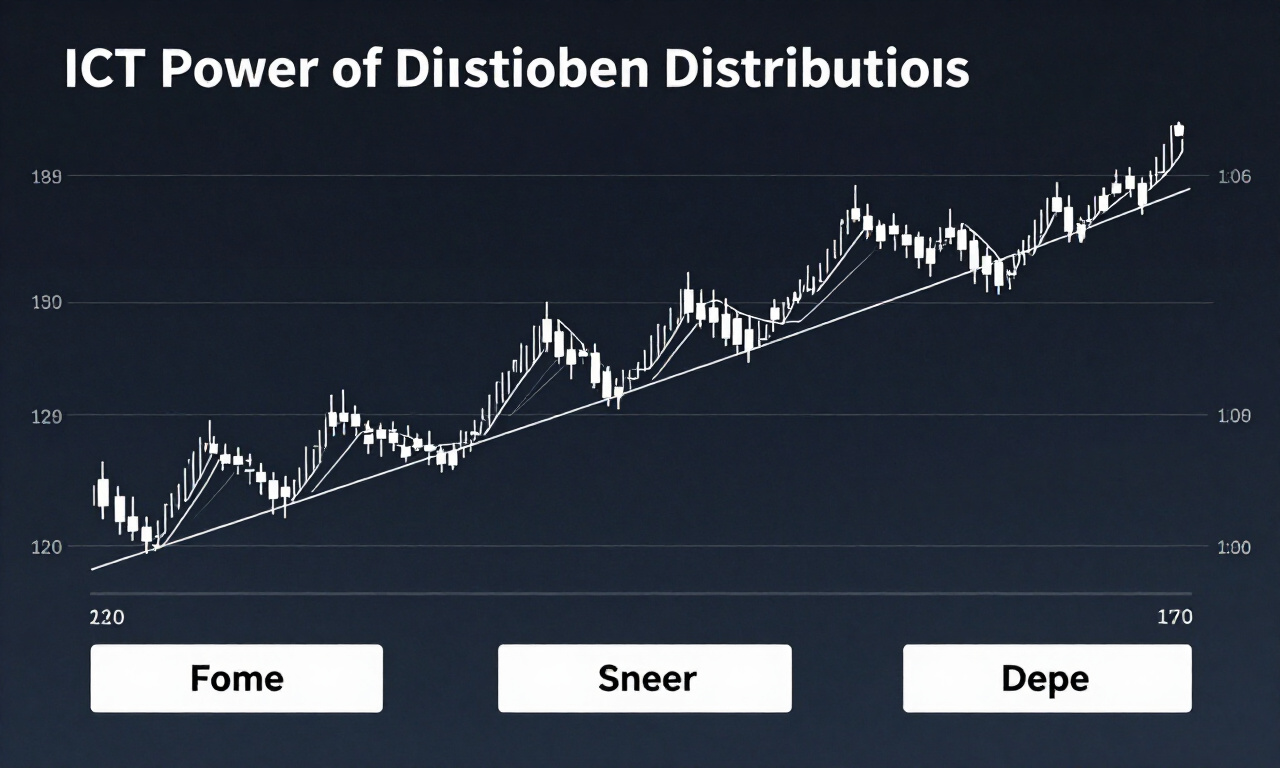
Execution of the Judas swing requires strict adherence to liquidity sweep confirmation and price-action triggers. Traders must wait for the price to raid a specific liquidity level before looking for a market structure shift. This prevents premature entry and increases the statistical probability of capturing the start of the distribution phase.
Many traders try to guess where the Judas swing ends. This is a losing game. Instead, wait for a lower-timeframe shift in market structure (SMS). For example, if you are looking for a long, wait for the price to go below the Asian session low, then watch for a 1-minute candle to break a recent minor swing high. This confirms that the sell-side liquidity has been successfully harvested and the buyers are now in control.
The stop-loss should always be placed below the structural low created during the manipulation phase. Since this is the “true” institutional low of the day, if it is violated, the premise of the PO3 cycle for that session is invalidated. Keeping stops tight in this manner allows for a higher number of contracts per trade without increasing the total dollar risk.
- Identify the daily bias based on higher timeframe order flow.
- Mark the Asian session high and low as your liquidity zones.
- Wait for a raid on these zones during the London/NY open.
- Enter after a visible market structure shift (break of a minor high/low).
- Target the opposite session liquidity or institutional order blocks.
Refining these entry rules will significantly impact your win rate. Remember that the market is a game of patience. Most of the time, the market will not provide a clean PO3 setup. When it does not, the most professional decision is to remain on the sidelines. Chasing volatility where no institutional cycle is present often leads to poor risk-adjusted returns.
Risk Management and Trade Planning
Risk management within the PO3 framework necessitates a focus on asymmetry and fixed percentage sizing. Because you are entering at the turning points of the daily range, your potential for profit is theoretically much higher than your risk, allowing for asymmetric returns that sustain long-term trading portfolio growth.
Never risk more than 1-2% of your account on a single PO3 setup. The beauty of this strategy is the precision. Because you are entering at the extreme of the manipulation phase, you can often achieve risk-to-reward ratios of 1:3 or 1:5. This means that even with a moderate win rate, your overall profitability remains high over the course of [currentyear].
Trade planning for PO3 should be done prior to the market open. Before the day begins, mark the key levels from the weekly and daily charts. These are your target zones. When the price hits these levels during the manipulation phase, your plan is already in place. This removes the emotional pressure that leads to poor decision-making during the heat of the session.
Practitioner Pro-Tip: Journal every trade, noting whether the price successfully completed the Distribution phase. If the price fails to expand after the manipulation, it suggests that the institutional bias has changed. Recognizing this shift early is just as important as identifying the entry itself.
Frequently Asked Questions
Frequently asked questions regarding the Power of 3 strategy cover common concerns such as time-zone selection, asset suitability, and handling news events. Addressing these queries ensures that the strategy is applied correctly across different financial markets while maintaining institutional-grade rigor during your daily routine in [currentyear].
- Can the PO3 strategy be applied to all timeframes? While it is technically possible, the strategy is most effective on intraday charts (1m to 15m) using the daily price cycle, as it aligns with how institutional orders are distributed throughout a 24-hour trading session.
- Do I need to trade during specific sessions? Yes, the strategy relies on liquidity sweeps that occur during the London and New York opening windows. Trading during quiet, illiquid times often results in false signals and lacks the expansion required for profitable distribution.
- How does news volatility affect the PO3 cycle? High-impact news events often act as the catalyst for the Manipulation phase. Instead of avoiding news, experienced traders use the resulting volatility to enter the market once the liquidity sweep is completed.
- What if the market does not perform a Judas swing? If there is no manipulation of the previous session’s liquidity, the setup is incomplete. It is better to skip the day rather than forcing an entry into a market that is not presenting the necessary structural characteristics.